
Encapsulation is a fundamental concept in object-oriented programming that refers to the practice of hiding the internal details of an object and exposing only the necessary information to the outside world.
- Allows controlled access using access modifiers (private, protected, public).
- Protects object data from direct external access.
- Encapsulation can be achieved using closures and using classes.
Using Closures
A closure is a function that retains access to variables from its outer scope even after the outer function has finished executing. Variables behave as private due to closure scope (not access modifiers), enabling controlled access.
- Maintains access to outer scope variables beyond function execution.
- Provides data hiding through closure scope.
- Enables controlled access to variables.
- Commonly used for creating private-like behavior in JavaScript.
Example:
function BankAccount(accNum, accHolder, balance) {
    let _accNum = accNum;
    let _accHolder = accHolder;
    let _balance = balance;

    function showAccountDetails() {
        console.log(`Account Number: ${_accNum}`);
        console.log(`Account Holder Name: ${_accHolder}`);
        console.log(`Balance: ${_balance}`);
    }

    function deposit(amount) {
        _balance += amount;
        showAccountDetails();
    }

    function withdraw(amount) {
        if (_balance >= amount) {
            _balance -= amount;
            showAccountDetails();
        } else {
            console.log("Insufficient Balance");
        }
    }

    return {
        deposit: deposit,
        withdraw: withdraw
    };
}

let myBankAccount = BankAccount("123456", "John Doe", 1000);

myBankAccount.deposit(500);
myBankAccount.withdraw(2000);
A BankAccount object using a closure encapsulates account data by keeping variables private while exposing controlled methods for interaction.
- _accNum, _accHolder, and _balance are private variables.
- Private variables are accessible only within the BankAccount function.
- showAccountDetails is a private method for displaying account information.
- deposit and withdrawal are public methods.
- Public methods update the balance and display updated details.
Using Classes
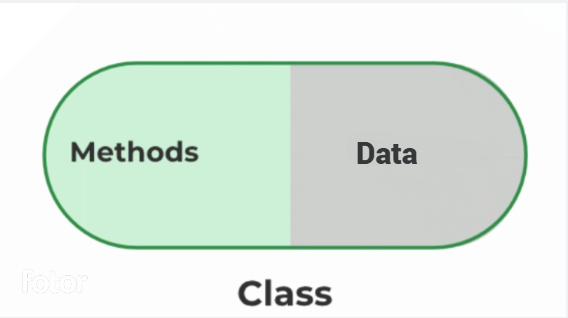
ES6 introduced the class syntax in JavaScript, which allows us to define classes and objects in a more structured way. Classes can be used to achieve encapsulation in JavaScript.
- Supports object-oriented features such as inheritance and method definitions.
- Allows grouping related data and behavior together.
Example:
class BankAccount {
    constructor(accNum, accHolder, balance) {
        this._accNum = accNum;
        this._accHolder = accHolder;
        this._balance = balance;
    }

    showAccountDetails() {
        console.log(`Account Number: ${this._accNum}`);
        console.log(`Account Holder Name: ${this._accHolder}`);
        console.log(`Balance: ${this._balance}`);
    }

    deposit(amount) {
        this._balance += amount;
        this.showAccountDetails();
    }

    withdraw(amount) {
        if (this._balance >= amount) {
            this._balance -= amount;
            this.showAccountDetails();
        } else {
            console.log("Insufficient Balance");
        }
    }
}

let myBankAccount = new BankAccount("123456", "John Doe", 1000);
myBankAccount.deposit(500);
A BankAccount class is created using the class keyword to organize account data and related operations in a structured manner.
- Uses _accNum, _accHolder, and _balance as internal variables.
- Underscore prefix indicates intended private usage.
- showAccountDetails is a public method for displaying account information.
- deposit and withdrawal are public methods accessible from outside.
- These methods modify the balance and display updated details.