
To detect the operating system on the client machine, one can simply use navigator.appVersion property.
The Navigator appVersion property is a read-only property and it returns a string that represents the version information of the browser.
Syntax:
navigator.appVersionExample 1: This example uses the navigator.appVersion property to display the operating system name.
<!DOCTYPE html>
<html>

<head>
    <title>
        How to detect operating system on the
        client machine using JavaScript ?
    </title>
</head>

<body style="text-align:center;">

    <h1 style="color:green;">GeeksforGeeks</h1>

    <button ondblclick="operatingSytem()">
        Return Operating System Name
    </button>

    <p id="OS"></p>

    <!-- Script to display the OS name -->
    <script>
        function operatingSytem() {
            let OSName = "Unknown OS";
            if (navigator.appVersion.indexOf("Win") != -1) OSName = "Windows";
            if (navigator.appVersion.indexOf("Mac") != -1) OSName = "MacOS";
            if (navigator.appVersion.indexOf("X11") != -1) OSName = "UNIX";
            if (navigator.appVersion.indexOf("Linux") != -1) OSName = "Linux";

            // Display the OS name
            document.getElementById("OS").innerHTML = OSName;
        }
    </script>
</body>

</html>
Output:
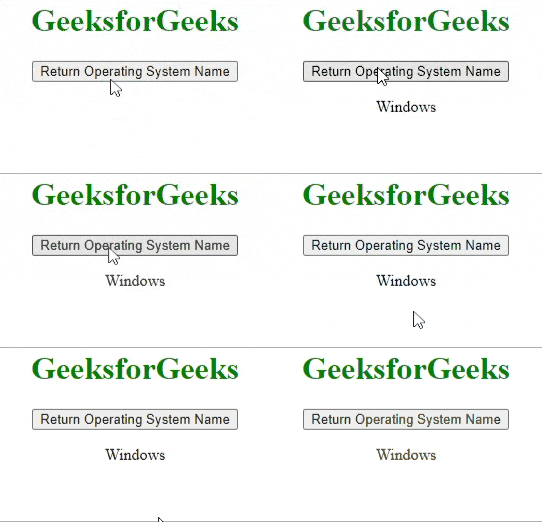
Example 2: This example uses the navigator.appVersion property to display all the properties of the client machine.
<!DOCTYPE html>
<html>

<head>
    <title>
        How to detect operating system on the
        client machine using JavaScript ?
    </title>
</head>

<body style="text-align:center;">

    <h1 style="color:green;">GeeksforGeeks</h1>

    <button onclick="version()">
        Return OS Version
    </button>

    <p id="OS"></p>

    <!-- Script to return OS details -->
    <script>
        function version() {
            let os = navigator.appVersion;

            // Display the OS details
            document.getElementById("OS").innerHTML = os;
        }
    </script>
</body>

</html>
Output: