
The console.log() function in Node.js is a built-in method used to display output in the terminal, making it useful for checking values and following what happens as code runs.
- Prints messages, variables, or expressions to the console.
- Helps with debugging and quick testing during development.
Syntax
console.log([data][, ...additionalData]);where,
data:primary value to be printedadditionalData:optional extra values, separated by commas, that will also be printed in the same line
This function contains multiple parameters that are to be printed.
Return type:Prints output to the console and returns undefined.
Example 1:
function GFG(name) {
     console.log("hello " + name);
}

// when parameters are passed
GFG("Geeksforgeeks");
Output:

Example 2:
function GFG(name) {
     console.log("hello " + name);
}

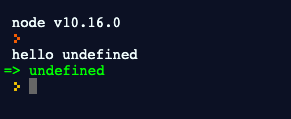
// No parameters are passed
GFG();
Output:
Use Cases
- Debugging code: Helps identify issues by printing variable values and execution flow.
- Tracking program execution: Useful for understanding which parts of the code are running.
- Displaying results: Outputs computed values or function results to the terminal.
- Inspecting data structures: Allows viewing objects, arrays, and JSON data during runtime.
- Quick testing: Helps verify small code snippets without using a full debugger.