



Indonesia has made its stance clear: it has no intention of levying tolls on the Strait of Malacca.
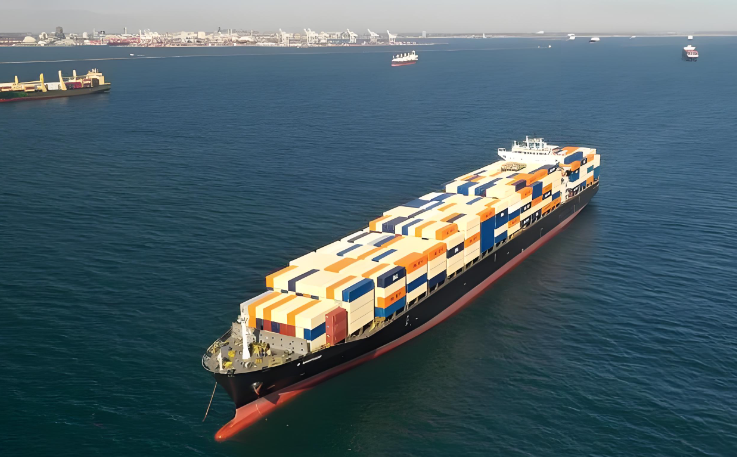
Recently, in response to the previously proposed idea of tolls for navigating the Malacca Strait by domestic financial authorities, Indonesian officials quickly issued a clarification signal, explicitly rejecting the plan to levy tolls on passing vessels, effectively alleviating widespread concerns in the global shipping market.
Indonesian Foreign Minister Sugiono stated publicly in Jakarta on Thursday that as a maritime nation with a high dependence on trade, Indonesia has always firmly upheld the freedom of international navigation and is fully committed to ensuring the unimpeded and stable flow of `key` maritime passages. Based on its national positioning and considerations for regional shipping cooperation, Indonesia will not impose tolls on ships passing through the Malacca Strait, as such fee measures do not align with current regional shipping development and multilateral cooperation needs.
The incident originated from recent remarks made by Indonesian Finance Minister Sadwa. On Wednesday, Sadwa publicly raised a controversial discussion, questioning the long-standing status quo of Indonesia not charging fees for ships transiting the Malacca Strait, which triggered widespread market debate. As a critical chokepoint for global energy, chemical bulk commodities, and container shipping, the Malacca Strait is a `key` transport corridor for Asia-Pacific industrial and supply chains. If a toll policy were implemented, it would directly drive up global maritime shipping costs, creating a chain reaction on energy transportation, chemical raw materials, and bulk commodity trade chains.
With the Foreign Minister officially stepping in to set the tone, internal policy divergences within Indonesia have been settled. In the short term, navigation rules for the Malacca Strait will remain the status quo, with no expectation of additional fee policies being implemented. This timely official clarification has stabilized sentiment in the international shipping market and also reflects the core orientation of coastal states in governing `key` international waterways: prioritizing the smooth flow of global trade and regional economic stability.
Important Information
- 1 Premium over 301 times! Juhua Group wins f New
- 2 Since June, fluorine chemical companies ha Hot
- 3 Weak crude fails to stop PX and PTA streng Hot
- 4 Canada officially announces one-year exten
- 5 Unexpected production failure at BASF Indi
- 6 Industrial Dynamics Report on Fluorine Che
- 7 Revised version of "Provisions on the Admi
- 8 EU proposes to freeze Russian crude oil pr
- 9 BASF, Covestro, and Huntsman collectively
- 10 Two major central state-owned enterprises
Commodity Price Chart
| Product name | Price (yuan/ton) | Price Limit |
|---|---|---|
| MEK | 7900.00 | -12.87% |
| Ethylene oxide | 6800.00 | -10.53% |
| Lithium hydroxide | 140000.00 | -10.26% |
| Lithium carbonate | 160000.00 | -10.11% |
| Isobutyraldehyde | 6733.33 | -9.82% |
| Ammonium sulfate | 1503.33 | -9.80% |
| Lithium carbonate | 158000.00 | -9.71% |
| ECH | 10400.00 | -8.77% |
| Lithium hydroxide | 152000.00 | -8.43% |
| Adipic acid | 8366.67 | -8.06% |
| Propylene glycol methyl ether | 8883.33 | -7.85% |
| TDI | 14800.00 | -7.31% |
| Sulfamic Acid | 4630.00 | -7.21% |
| Aniline | 9525.00 | -7.19% |
| Sulfur | 8033.33 | +7.11% |
Commodity Intelligence
More-
Acetic acid 17:32
-
Acetic acid 17:31
-
Acetic acid 17:29
-
Acetic acid 17:26